Drink-Driving Penalties in Serbia: What Awaits You After a Police Check
A guide for drivers who were breath-tested: how to read the result, tell the documents apart and check whether a special regime applies to you.
Under the Road Traffic Safety Act, a driver is considered to be under the influence of alcohol when more than 0.20 mg/ml of alcohol in the blood is established, with special rules for certain categories of drivers. Sanctions depend on the level of intoxication and may include a fine, penalty points and a driving ban, and in the most serious cases a prison sentence. If the police stopped you, breath-tested you and handed you a document, do not assess the consequences only on the basis of the number shown on the device. What matters is the result and the unit in which it is expressed, your status as a driver, the circumstances of the check and the type of document you received.
This guide provides general information on the procedure after a police check for alcohol in traffic. It is not legal advice for an individual case. If proceedings are conducted against you, especially when there is a risk of a driving ban, the content of the act, the established facts and the applicable regulations are decisive.
First check what the result and the document say
This text is intended for drivers who were stopped and breath-tested on suspicion of driving under the influence of alcohol, regardless of whether they were handed a document on the spot or are expecting a later notice. Before assessing the possible consequences, review every document you received and compare its data with the circumstances of the check.
If the police draw up a record, do not sign it and do not enter any objections in it. Keep the copy handed to you and leave further assessment to a lawyer. Check in particular:
- the test result entered in the document;
- the unit of measurement in which the result is expressed;
- the time of measurement and the place of the check;
- your name and other identification data;
- the description of the act you are charged with;
- the reference of the document, the authority that issued it and the date on which it was served on you;
Interpret the result according to the unit of measurement and the range stated in the documentation. The statutory limits are expressed in milligrams of alcohol per millilitre of blood (mg/ml), a unit commonly associated with per mille. Do not convert the result yourself and do not rely on online tables of unknown origin. A misread value or mismatched units may lead to a wrong conclusion about which provision applies.
Keep the original document, the proof of service, copies of the record and all notices delivered later. Keep the documentation even if you believe the matter has been closed by payment or by the passage of time. It may be needed for further steps and for checking the enforcement of an imposed measure.
The breath test result is not the same as a final decision
The result entered in the document is an important piece of information, but on its own it is not a final decision on your liability and does not determine all possible consequences. The further course depends on the type of act issued, the description of the event and other circumstances established by the competent authority.
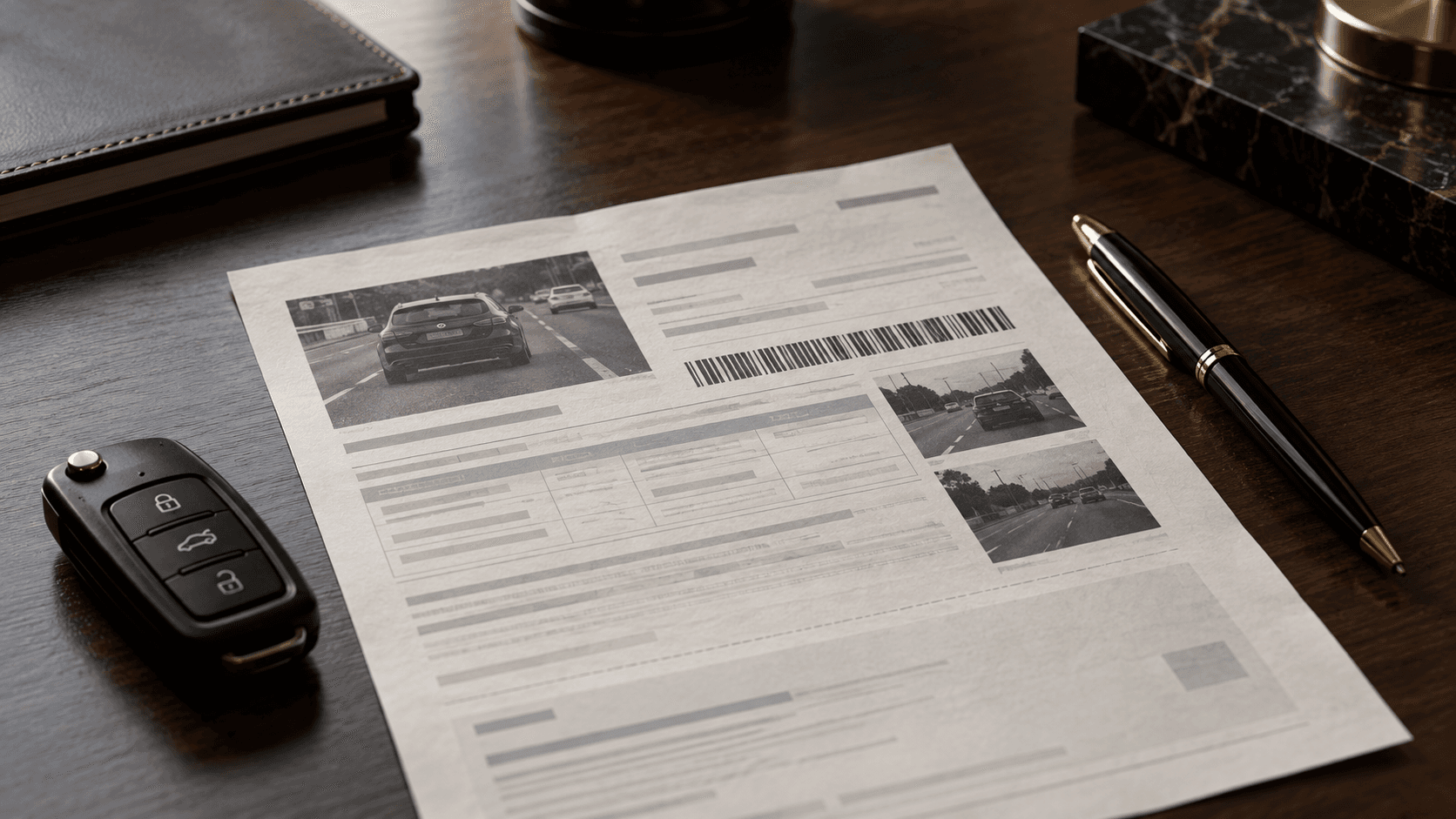
A misdemeanour order, a record of the check and a summons from the misdemeanour court serve different purposes. An order may require you to choose a course of action within a certain deadline; a record documents the data and actions taken during the check, while a court summons indicates proceedings before the court. Therefore establish carefully which document you received and what it requires of you.
What consequences may follow depending on the level of intoxication
Article 187 of the Road Traffic Safety Act classifies the levels of intoxication according to the established blood alcohol content, while the sanctions are prescribed in the penal provisions, among others in Articles 329–338. Where prescribed, a fine, penalty points and the protective measure of a driving ban may be imposed cumulatively.
| Measured (mg/ml) | Level | Penalty | Penalty points | Driving ban |
|---|---|---|---|---|
| more than 0.20 to 0.50 | moderate | 10,000 dinars | none | none |
| more than 0.50 to 0.80 | medium | 10,000 to 20,000 dinars | 6 | at least 3 months |
| more than 0.80 to 1.20 | high | 20,000 to 40,000 dinars or imprisonment of up to 30 days | 8 | at least 4 months |
| more than 1.20 to 1.60 | severe | 100,000 to 120,000 dinars or imprisonment of at least 15 days | 9 | at least 8 months |
| more than 1.60 to 2.00 | very severe | 100,000 to 120,000 dinars or imprisonment of at least 15 days | 14 | at least 8 months |
| more than 2.00 | complete (reckless driving) | imprisonment of 30 to 60 days and 120,000 to 140,000 dinars, or community service of 240 to 360 hours and 120,000 to 140,000 dinars | 15 | at least 9 months |
| refusal of the breath test | 100,000 to 120,000 dinars or imprisonment of at least 15 days | 14 | at least 8 months |
In cases of severe, very severe and complete intoxication, as well as in the case of refusal of testing, the driver is detained until sober, for no longer than 12 hours (Article 283). For drivers of buses carrying passengers, public transport vehicles, vehicles carrying dangerous goods and vehicles with right of way, the law provides for additional penalty points from medium intoxication, or a longer driving ban from high intoxication.
Where the penalty is prescribed within a range, the misdemeanour court decides on its amount within the statutory limits, assessing the circumstances of the specific case. It is therefore important to check what is stated in the act, including the measurement result, the description of the act and any aggravating or mitigating circumstances.
Payment of the fine should not be equated with all other consequences. Penalty points are recorded on the basis of a final decision and are deleted after 24 months, while a driver who accumulates 18 or more points has their driving licence revoked. A lower threshold applies to a driver with a probationary licence. To assess the consequences in a specific case, check the documentation and the provisions applied.
The permitted limit and drivers subject to zero tolerance
Under the general rule of Article 187, a driver is under the influence of alcohol if more than 0.20 mg/ml of alcohol in the blood is established. The law designates a content of up to 0.20 mg/ml as mild intoxication; for most drivers, that level on its own does not constitute the offence of driving under the influence of alcohol.
Zero tolerance applies to certain categories of drivers, meaning they are prohibited from driving if they have any alcohol in their body. These are:
- a driver with a probationary driving licence and the person supervising them;
- a driver of a motor vehicle registered to carry more than eight persons or of a vehicle with a maximum permissible mass exceeding 3,500 kg;
- a driver carrying out public transport of persons or goods;
- a driver of a vehicle carrying dangerous goods or performing exceptional transport;
- a driver of a motorcycle or moped of category A1, A2, AM or A;
- a driving instructor during practical training, a candidate during practical training or the driving test, and an examiner at the practical test;
- a driver of a vehicle with right of way and a driver of an escorted vehicle.
For these categories, mild and moderate intoxication (up to 0.50 mg/ml) is punishable by a fine of 10,000 dinars. For higher levels, the sanctions prescribed for the corresponding level of intoxication apply, with special rules relating to the driver's status.
A driver with a probationary driving licence should check the number of penalty points in particular. The licence is revoked when nine or more points are accumulated, not 18. Severe intoxication, for which nine points are prescribed, may therefore lead to the revocation of a probationary licence.
The mere fact that you hold a category B licence is not enough for an assessment. Check in the documentation how your status was recorded and what type of vehicle you were driving.
Refusal of the breath test, cycling under the influence of alcohol and the statute of limitations are also covered below.
Order, record or court summons: what is your next step
The next step depends on the document served on you. A misdemeanour order, a record of the check and a summons from the misdemeanour court have different purposes and legal effect. First establish which document it is, and then act in accordance with its content and instructions.
A misdemeanour order is issued for offences for which a fine in a fixed amount is prescribed (Article 336a). In the case of alcohol, an order may relate to moderate intoxication, for which a fine of 10,000 dinars is prescribed. For medium and higher levels, the penalty is prescribed within a range, so a request to initiate misdemeanour proceedings is filed and the misdemeanour court decides on the sanctions.
If you were served with a misdemeanour order, check the accuracy of your personal data, the description of the act, the measurement result, the cited regulation and the instructions on legal remedies, that is, on how to proceed. The order contains information on payment and on the possibility of filing a request for a court decision. Rely on the content of the act and the applicable regulations, not on verbal information about the supposed procedure.
A record, as a rule, documents the course of the check and facts that may be relevant in further proceedings. Keep the copy that was handed to you. A record on its own does not necessarily mean that a sanction has been finally imposed, but it may serve as evidence in misdemeanour proceedings.
If you received a summons from the misdemeanour court, check the name of the court, the case number, the date and time of the scheduled hearing and the documentation you need to submit or bring. To prepare, gather all documents received during the check and afterwards. Do not ignore the summons: missing a deadline or a step may have procedural consequences, and the applicable deadline is stated in the summons itself.
If there are disputed facts regarding the measurement, disagreement with the content of the record or a risk of a driving ban, it is advisable to have a lawyer review the complete documentation before taking any further steps. MB Law – Joint Law Office Marković & Bogdanović provides legal assistance in misdemeanour cases, including review of documentation and representation in accordance with the circumstances of the specific case.
For a more detailed explanation of the difference between paying a misdemeanour order and a court decision, see the guide on the misdemeanour order for a traffic offence.
What paying a misdemeanour order means, and what it does not resolve
The legal effect of payment is assessed according to the content of the specific order and the rules governing that procedure. Before paying, read the instructions on the act carefully and check the deadlines; do not draw conclusions only from other people's experience.
Paying the fine does not necessarily mean that all other consequences have been removed. Penalty points and the protective measure of a driving ban are separate legal consequences. Whether they apply in a specific case is established from the documentation and the regulations on which the act is based.
Under the Law on Misdemeanours, if you pay the fine from a misdemeanour order within eight days of service, you may pay half of the imposed fine. By paying, you accept liability for the offence. If you contest the order, you may file a request for a court decision within the same deadline. Before acting, check the deadline and the instructions stated in the order.
Breath test, repeated measurement and blood analysis
During the check, act calmly and follow the actions of the official. If a record has been drawn up, do not sign it and do not enter any objections in it. Keep the copy you received and all other documentation.
Refusing to sign does not in itself mean that the record will not be used in the proceedings, nor does it automatically invalidate it. We will assess its content and evidentiary value afterwards, after reviewing the entire case.
If you contest the result of the breath test, Article 280 of the Road Traffic Safety Act provides for the possibility of requesting a blood analysis, or a blood and urine analysis, at an authorised healthcare institution, at your own expense. The request is made in writing, on the spot, for entry into the record in which the test result was recorded. Since the request is made during the check, it is important to state it without delay.
When a driver requests a blood analysis, the police temporarily exclude them from traffic (Article 279). The driver cannot continue driving while the exclusion lasts.
Refusal of the breath test or another prescribed procedure
Refusing the breath test does not exclude liability. Under Article 330 of the Road Traffic Safety Act, refusal of the prescribed testing is punishable by imprisonment of at least 15 days or a fine of 100,000 to 120,000 dinars, 14 penalty points and a driving ban of at least eight months. The law prescribes these sanctions for certain higher levels of intoxication as well. A driver who refuses testing is mandatorily detained, for no longer than 12 hours.
If testing was refused, or you dispute that you refused or the manner in which the procedure was carried out, review every document drawn up during the check and all acts delivered later.
If a hazard or a traffic accident occurred
The case is more complex when, in addition to alcohol, there was an immediate hazard, a traffic accident, an injury or material damage. Alcohol is then not the only relevant fact. The course of events, participants, traces, statements, the record, medical documentation and data on the damage may all be significant.
For certain cases of traffic accidents, the law prescribes stricter sanctions. For example, when the accident was caused by a driver with severe or very severe intoxication, imprisonment of at least 45 days or a fine of 120,000 to 150,000 dinars, a driving ban of at least ten months and 16 penalty points may be imposed, or 11 points for severe intoxication. If someone was injured or greater damage occurred, the question of criminal liability may also arise, depending on the established facts and applicable regulations.
Compare the data in all documents: the listed participants, the place and time of the event, the description of the damage or injury and the acts you received. If the question of compensation for damage or insurance arises, the rules on liability for damage and insurance may be relevant. The outcome of misdemeanour proceedings or a claim for compensation cannot be reliably predicted in advance.
Special situations: cycling, driving ban and statute of limitations
Riding a bicycle under the influence of alcohol cannot be equated with driving a motor vehicle without further verification. Special rules apply to cyclists, and the legal assessment depends on the applicable regulation and the circumstances of the case. Sanctions prescribed for the driver of a motor vehicle should not be automatically applied to a cyclist.
If a driving ban has been imposed on you, check the content of the decision or other relevant act: which category it relates to, its scope, when it was issued and how it is enforced. Do not assume that the measure starts on the day of the check, the receipt of the document or the payment of the fine. The start and duration of enforcement are determined according to the act and the applicable rules.
For the offences covered by this guide, under the general regime, proceedings cannot be initiated or conducted once one year has passed from the day the offence was committed. Every procedural step taken by the competent court to conduct the proceedings interrupts this period, which then starts to run again. Absolute limitation occurs when twice that time has passed, which under the general regime is two years from the day the offence was committed. A longer period, of up to five years, may be prescribed by a special law for certain areas, so it is not true that all offences become time-barred within two years. Statutory suspension and special deadlines may affect the calculation, so the statute of limitations is assessed according to the type of offence, the applicable regulation and the procedural steps in the case.
Before you act, check the following:
- keep every document received during and after the check;
- check the result and the unit of measurement stated in the act;
- establish whether you received a misdemeanour order, a record or a court summons;
- read the deadline stated in the document and act without delay;
- if you contest the measurement, the refusal of the test, the accident or the driving ban, ask for a lawyer's review of the documentation.
The final assessment of the legal consequences depends on the facts of the specific case and the applicable regulations. This text provides general information and does not constitute legal advice for an individual case.
Frequently asked questions
What awaits me if the breath test showed a certain level of alcohol?
It depends on the measured level of intoxication. Under the Road Traffic Safety Act, for more than 0.20 to 0.50 mg/ml the fine is 10,000 dinars; for more than 0.50 to 0.80 mg/ml it is 10,000 to 20,000 dinars with 6 points and a driving ban of at least three months; and for more than 0.80 to 1.20 mg/ml it is 20,000 to 40,000 dinars or imprisonment of up to 30 days, with 8 points and a ban of at least four months. Above 1.20 mg/ml, fines of 100,000 dinars and more or imprisonment follow, with 9 to 15 points and a ban of at least eight months. Keep all documentation and check whether the result, your data and the time of measurement were entered correctly, as well as the deadline stated in the act.
Does my result carry a fine, penalty points, a driving ban, imprisonment or community service?
For moderate intoxication (more than 0.20 to 0.50 mg/ml), only a fine of 10,000 dinars is prescribed, without points or a driving ban. From medium intoxication (more than 0.50 mg/ml), penalty points and a driving ban are added to the fine. Imprisonment is possible from high intoxication (more than 0.80 mg/ml), and for complete intoxication (more than 2.00 mg/ml), which is considered reckless driving, imprisonment of 30 to 60 days and a fine of 120,000 to 140,000 dinars are prescribed, or community service of 240 to 360 hours and the same fine. The final decision is also influenced by the circumstances, for example whether there was an accident or other road users were endangered.
Does the same permitted limit apply to a category B driver as to a probationary or professional driver?
No. For most category B drivers, up to 0.20 mg/ml of alcohol in the blood is permitted. For drivers with a probationary licence, professional drivers (public transport, vehicles for more than eight passengers or heavier than 3,500 kg, dangerous goods), motorcycle and moped riders, instructors, candidates and drivers of vehicles with right of way, zero tolerance applies, so they are fined as early as mild intoxication, with a fine of 10,000 dinars. A driver with a probationary licence has it revoked upon accumulating 9 or more penalty points. Check in the documentation how the police recorded your status and which vehicle you were driving.
What should I do when I receive a misdemeanour order, a record or a summons from the misdemeanour court?
First establish which document you received, who issued it and what deadline it states. A misdemeanour order, a record of the check and a summons from the misdemeanour court are not the same and do not necessarily require the same action, so do not leave the document unanswered. Keep the original, the envelope or proof of receipt, the breath test confirmation and all other documents. Check your identity, the date, time, place, description of the act, measurement result and the instructions on the legal remedy or next step. A record may be evidence of the event, while a court summons means that you should prepare for proceedings before the misdemeanour court. If the stated deadline is short, seek a legal review without delay. A lawyer can review the act and explain the options according to its content.
By paying the order, do I admit the offence, and do the driving ban and penalty points disappear?
Yes, by paying the fine from a misdemeanour order you accept liability for the offence. If you pay within eight days of service, you pay half the amount. For alcohol, an order is issued for moderate intoxication (more than 0.20 to 0.50 mg/ml), for which the law prescribes neither penalty points nor a driving ban. For medium and higher levels of intoxication, no order is issued; instead, the misdemeanour court decides on the fine, points and ban, so payment alone cannot remove points or a ban. If you disagree with the order, you may file a request for a court decision within the same deadline.
Can I request a repeated measurement or a blood analysis?
You can, but only on the spot. Under Article 280 of the Road Traffic Safety Act, a driver who contests the breath test result may request a blood analysis, or a blood and urine analysis, at an authorised healthcare institution, at their own expense. The request is made in writing, in the record in which the test result was entered. Refusing the breath test itself is not the same as this request: refusal is punishable by imprisonment of at least 15 days or a fine of 100,000 to 120,000 dinars, 14 points and a driving ban of at least eight months. If you doubt the result, keep the record and write down the circumstances of the check while you still remember them clearly.

If this is your matter, the first step is a conversation.
SCHEDULE A CONSULTATION